Wednesday, February 29, 2012

Goals experiment: The Prow

It's common knowledge that most climbers don't like to talk about their future goals. Honestly, I don't really understand this. I guess talking about your goals feels a little too exposing, for some. Or maybe the fear is that it will set you up for failure. The fewer people who know that you intend to climb something, the fewer people you will need to explain your failure to. Maybe some are just frightened of jinxing themselves? I can't say. But I do know one thing. That shit is boring.

Crux pitch of The Prow (it can't be that hard...girls can climb it!)
Photo from mountainproject.com
We aim to push the boundaries here at the Bailure Blog -- climbing norms, societal expectations, and even good taste. So we decided we'd not only talk about our dearest, most closely held climbing goals, but we'd also like to lay them out in detail on this blog for all to see and judge.

For our first experiment, we decided we'd give you a gift, dear reader(s?). We're going to offer up one of our longest-held, most sacred free climbing goals for your scrutiny. Dan and I have been talking about onsighting one of Cathedral Ledge's tespiece climbs, The Prow, for over a year now. We think we're capable, and we're going to give it our best effort.  We hope to post a few times on this blog in the weeks leading up to our attempt, in order to document our training and thoughts on the upcoming climb (but no promises). Then, of course, we'd like to do a trip report or after-action debriefing.

Greater Internet Fuckwad Theory
We realize that by posting this, we're opening ourselves up to a lot of criticism. In essence, we're calling our shot, Babe Ruth style. We're going to walk up to The Prow and onsight that bitch. We understand that we may get exactly the type of crude, malicious invective that only anonymous internet posting can deliver, according to the Greater Internet Fuckwad Theory. But, we hope we'll receive thoughtful, incisive commentary instead. So, feel free to engage in this experiment. And that's exactly what this is, an experiment. We'll see how it works out. In the meantime, check back for possible pre-game posts about this classic New Hampshire route.

Tuesday, February 28, 2012

A collection of movements and a pair of testicles

What makes a man a man? Luckily, we've had the answer to this question since 1998, when the Dude summed it up so nicely: It's being prepared to do the right thing, whatever the cost ... along with a pair of testicles.

But what makes a route a route? Can a climbing route be more than just a collection of movements over rock and ice, or is it exclusively the sum of its parts?

Well, I think that depends on the person who climbs it. After all, it's people who create routes. Without the individual's experience, a route would be nothing more than just a series of movements. But when you add the human element, a route can become so much more. Take for instance New Hampshire's classic alpine route, The Black Dike. After three winter climbing seasons, I finally had the opportunity to climb this route in late February. To me, this route was much more than just three pitches of moderate rock and ice climbing in a stark alpine environment.
Black Dike in condition, February 2012
(photo taken from mountainproject.com)

Thursday, February 23, 2012

Old Ragged


When I started climbing 5 years ago, I liked how it brought out the best in me.  I liked how it drove me to bed early, how it inspired me to eat well, and how it stripped my focus to a crystal edge.  Climbing still focuses me, but I've become more comfortable, and have allowed my other life--real life--to encroach upon my climbing discipline more and more.  This weekend my "comfort" reached a new level.

The plan was to join Andre, one of DC's finest trad climbers, for a day on the granite of Old Rag in the Shenandoah Mountains of VA.  To prepare, I planned to get a light workout in on Friday night, have dinner with Laura, and get a solid night of sleep.  Nope.

Friday we said goodbye to someone I've worked with for the last 5 years.  He was a boss, colleague, and friend.  What started as a farewell happy hour at Matchbox gained momentum until there was no jumping off.

My alarm went off at 6:15am Saturday morning.  "Why do I have an alarm set on a Saturday?  That's ridiculous."  Then it all came back.  Andre would pick me up in 15 minutes.
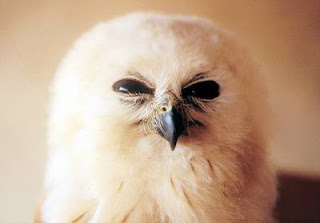
"What have I done?"

In a stupor, I filled my climbing pack, and jumped into Andre's waiting car.  Part of me engaged in conversation about our coming day, and another reeled in horror.  "When did I go to sleep last night?"  "How did we get to Cleveland Park from Rockville? Right, we took the metro, but Grosvenor Station was closed, wasn't it?  We rode a shuttle bus?"

On the rolling, curved roads at the base of Old Rag I became overwhelmed by nausea.  Andre kindly stopped the car and stood aside as I retched coffee and fruit.

Thank goodness for the hour and a half approach hike.  Thank goodness for the redemptive, cleansing therapy of long slow cardio.
Friday, January 6, 2012

White Thumb

I can't shake the feeling that I came into climbing in the wrong generation -- all the low hanging fruit has been plucked, coddled, and juiced. I want to explore! People say that we're now in a prime place in climbing history with modern techniques and gear opening up new amazing FA possibilities, and it's true. New routes these days blow my mind. But all that still falls into the elite category. If you look at the rates of growth of techniques, gear, and FA completion, I would propose that there was a knee in the curve when techniques became fairly modern but a lot of rock remained unexplored. It might be interesting to try to put some numbers to my harebrained proposal; in the mean time, my real point remains: new challenges are just fun!

The Sandias are full of unclimbed rock, linkup options, hardman potential, and training opportunities. When the first cold, snowy day hit us this winter (Dec 3, 2011), Micah and I sniffed the curious alpine fruit -- a snowy rock climb to whet our ambitions for AK 2012! (Note: I'm not suggesting this was the first snow climb of the route, no doubt it's been done.)

Excited for the unknown?
We would hit the NW ridge of the Thumb (III 5.5), a route I'd done in a few configurations already - with rope, without, etc. It'd be a perfect avenue to scratch up with crampons and a tool. And it was a blast!


Starting up easy ground.

It was a treat being completely alone in the canyon!


We roped up about 1/3 of the way up, where the sidewalk ends.


Wednesday, December 14, 2011

Whiteside, North Carolina

Dan and I headed down to North Carolina this past weekend for another "Smash and Grab" style road trip. We logged close to 19 hours in the car over a 48-hour period. Our destination: Whiteside Mountain.

In the climbing literature, much is made of the fearsome reputation of Whiteside. "With a reputation for loose rock, steep routes, skimpy gear, and wild weather, Whiteside Mountain remains among the most feared and revered climbing areas in the Southeast," reads the introduction to the wall in Lambert and Shull's Selected Climbs in North Carolina. Or, even more whimsically, Whiteside is "immense, scary and the closest thing to big wall, run-out adventure climbing you'll find in the south. This is the place for you if you wish to avoid the crowds and soil your drawers," quoth Thomas Kelley, author of The Climber's Guide to North Carolina. We didn't necessarily find the climbing to require multiple pairs of undies (at least not on the routes we chose), but there is some truth to the loose rock and runout-climbing rumors.


As is our custom, Dan and I debated for hours in the week leading up to our trip over which routes to attempt and in what style. We ended up settling on Arm & Hammer as our first adventure. We chose this route carefully. We knew that retreat on any route would be difficult given the long pitches and our choice to climb on a single rope. Yet we still wanted to challenge ourselves physically and mentally. A&H seemed a good compromise, as it is near our physical limit at 5.12a, but the most difficult pitches would be protected by bolts -- although they also happen to be the last three pitches of the climb. Bailing for any reason from the top of the climb would be "sporting," to say the least, as we would be several hundred feet in the air on an overhanging headwall. But at least, with the bolts, we stood a good chance of "failing upwards" (that is, admitting defeat yet continuing to make vertical progress by pulling on bolts and gear -- essentially finishing the route in poor style).

Tuesday, November 1, 2011

Early Gunks Winter

Pat McNally after leading the first pitch of Shockley's Ceiling amid the Halloween snow storm at the Gunks, NY.

Friday, October 21, 2011

Spock's Brain at Seneca Rocks


Seneca Rocks - Spock's Brain from Daniel Ressler on Vimeo.

My first video attempt.  Thanks to Tim G. for the footage, Brian G. for the belay and BurnDown for the track.